The full story of the pilot project carried out by Solomon and KWS - February & March 2026
Colobus in Kipipiri forest
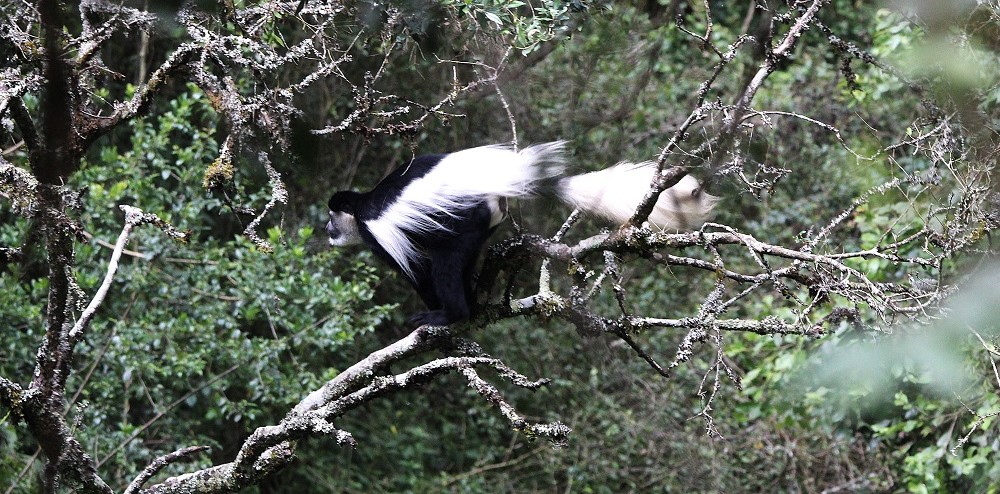
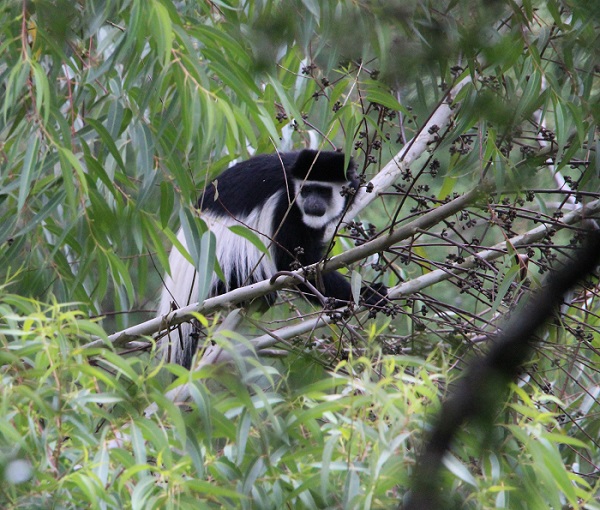
On 27th February we travelled to Gilgil to meet Solomon. We brought him a few pairs of our old binoculars, and a second-hand Canon camera to help him photograph the Colobus more effectively. The following day we visited two Colobus groups in the Kipipiri forest behind the golf club—a beautiful indigenous forest where the monkeys appear safe and thriving.
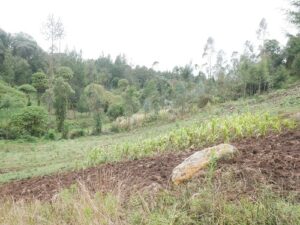
We then moved on to Ndunyu Njeru and Engineer, a very poor area where Solomon is working on the front line of conservation. He found us a simple, clean place to stay and arranged a local driver so we could see the situation firsthand. The poverty is stark, and the pressure on the environment is intense: forests have largely been cleared for charcoal and farming, and the remaining strips of riverine forest left are where Colobus are now vulnerable. Over the weekend we saw schoolchildren entering these areas to hunt them, underlining just how vital Solomon and his team—Simon and Ezekiel—are in protecting the groups.
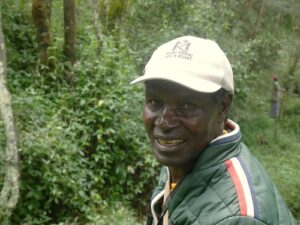
Solomon
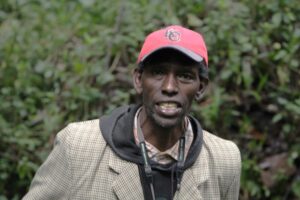
Simon
In some places, the fields go right down to the river, leaving no trees at all
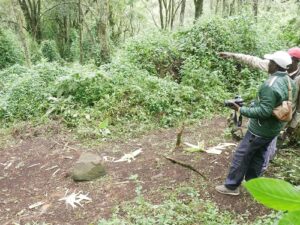
Solomon and Simon at the feeding and habituation site at Gathano
At Gathano, we observed the most endangered group, which Solomon and Simon have been feeding. This keeps the Colobus away from farms, where they would be killed, and helps habituate them for when the time comes to capture them. We saw a full Colobine family group of 14 individuals, on the verge of splitting. At Kwale, we visited two more critically endangered groups, though sightings were limited due to rain and early morning cold.
A key moment came on 2nd March, when Solomon organised a meeting with the Kenya Wildlife Service (KWS), led locally by Stephen Mwaiga. This marked a major step forward: thanks to Solomon’s persistence—and the support of crowdfunding—he has built strong working relationships with KWS. The partnership is now officially recognised.
The meeting also led to a crucial decision: the urgent relocation of endangered Colobus to safer habitats. KWS agreed to support the effort, including transport (with fuel covered by the project), while Solomon and Simon would carry out the captures using Solomon’s gentle, self-developed methods—avoiding harmful techniques like darting.
That same day, news reached us that two Colobus had been killed nearby for bushmeat and skins. This reinforced the urgency, and approval was quickly granted for a pilot relocation of four monkeys.
Two relocation sites were selected: Solai Conservancy for two females, and Mutubio Gate in the Aberdares National Park for two males. Solomon carefully assessed both locations, drawing on his deep understanding of Colobus behaviour to maximise their chances of successful integration.
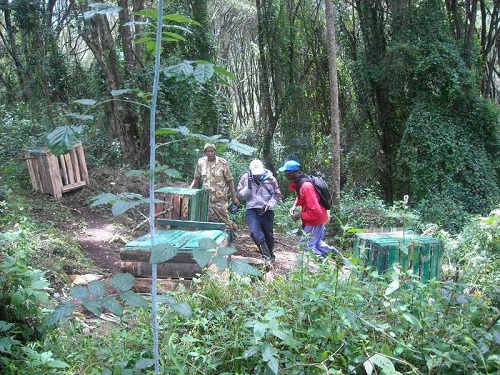
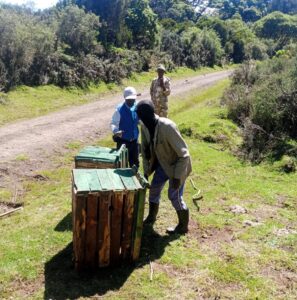
On 14th March, the pilot began. At dawn, Solomon set up his self-designed wooden cages at Gathano and laid out bait food. Within two hours, all four targeted Colobus—two males and two females—had been safely captured. The system had worked.
The females were transported to Solai Conservancy and placed temporarily in a holding cage to adjust to their new habitat. After three days, they were released into the acacia forest, identical to the Soysambu habitat of previous successful relocations. The two males were held briefly at KWS Ndunyu Njeru, where Solomon personally fed them, before being released the next day at Mutubio Gate.
Delivering the new wooden cages to the capture site, Gathano
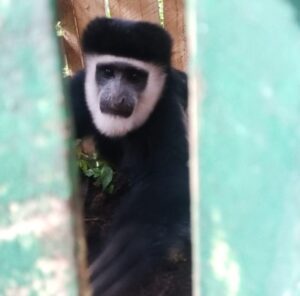
One of the four Colobus captured at Gathano
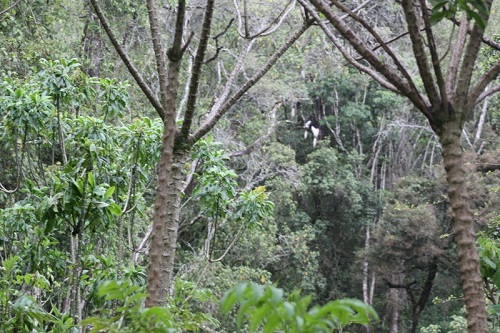
Releasing the two males at Mutubio Gate, Aberdares National Park
The two males released in the Aberdares NP immediately lept into these trees
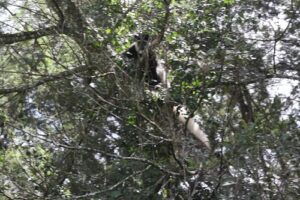
The lone male in the Aberdares NP that Solomon observed when he went back to monitor the two males
Solomon’s follow-up monitoring has been encouraging. The sub-adult male has already been accepted into an existing group, while the adult male remains nearby, as expected, positioning himself to eventually form a new group with one or two females from the existing group.
This pilot project marks a significant breakthrough—demonstrating that safe, humane relocation of Colobus is not only possible, but effective.
The conclusions and key findings of the pilot project are :
The pilot relocation was successfully executed within a rapid-response timeframe, thanks to the work Solomon and Simon had started November/December 2025
Immediate intervention is critical to prevent further killings due to human-wildlife conflict
Strong collaboration with KWS enabled efficient planning and execution
The wooden cage design proved effective, secure, and appropriate for local conditions
Solomon’s humane capture and feeding methods are essential to the success of relocations
Targeted relocation strategy (by sex and site) supports social integration and genetic diversity
Early monitoring indicates positive integration outcomes
The project demonstrates a scalable model for future relocations
Continued monitoring and habitat restoration are essential for long-term success
Community engagement and education remain key to reducing human-wildlife conflict